As the title - and the new URL - of this site suggest, I am moving on. But fear not! This is not me removing myself from the blogosphere, but rather re-entering it. Where, I have not yet decided. But I will leave a link here, or find a way for the site to redirect, when I do.
It's been a long time. Too long, I think, to pick up the threads of this old tapestry. But it will still be here, to weave its way back to the very first days of my teenage self taking her first steps into the interwebs. The best posts will be copied and carried over, and the spirit of my blogging purpose will remain much the same.
If anyone's still here, I'll see you on the other side.
Thursday, 28 July 2016

Wednesday, 14 October 2015
Let's Get Critical
I have a problem with stupid things - and, sadly, I'm talking about the fun kind today. You know what I mean, those books, movies, TV shows or random internet sketches that appeal to the absolute basest sources of humour and make your inner five-year-old guffaw so loudly you can't help joining in.
I have a problem with them. Several problems. Problems I will grumble about to anyone within hearing range, prompting several rolled eyes and quiet insinuations that I'm being too picky / too uptight / too politically correct and should just turn my brain off and enjoy the stupid for stupid's sake.

See, I can't turn off my brain. And, now that I think about it, I don't want to.
Humour is one of the most subjective and slippery responses to stimuli that the human body produces, like that slightly undercooked pancake sat atop the head of the rabbit in that picture your grandmother has sent you four times in the last month because she thinks that's the sort of thing young people these days find hilarious. Everyone's idea of humour depends on innumerable varying factors, personal and cultural and a thousand things in between, and the sheer breadth of the genre defies any real objective statements.
However, that does not mean we cannot think critically about things that move under the banner of humour, and consider the responses it seeks to ellicit, how it seeks to generate them, and what exactly it wants us to be laughing at.

One of the jobs I've taken on alongside my degree involves reviewing drama - either in CD form, or in live performance, as was the case with Dickens Abridged here. My own distaste for Dickens notwitstanding, I was a little leery of my first live review having to hinge on my understanding of something as subjective as whether or not the jokes hit home. After all, I could say what I liked about the staging, lighting and production value, but if I did not laugh then I was missing out on an enormous part of the play's purpose, and my review, to my mind, would fall short.
Luckily for me, Dickens Abridged scored enough hits on the treacherous spinning wheel of my funny-o-meter that the anxiety never came to fruition, and I was left with the much less challenging task of trying to decipher the comments I had written in pitch blackness with one eye still on the stage.
If I had turned off my brain and tried to enjoy the humour without any critical thought, I could probably still have written that review. Heck, I might even have given it a full five-star rating, without the nasty, spindly voice of criticism sat on my shoulder, clutching a pen in one hand and cutting its teeth on the theatre guide with the other. On that logic, I might also have been able to sit down with my friends and watch the very worst of 90s daytime sitcoms without the urge to spit verbal bile at the screen every time the canned laughter starts up.
But what's the point of a brain if we have to turn it off? And, surely, any humour that you have to go against your instinct to enjoy is not humour you should have to make yourself watch. Life is too short, and comedy too diverse, to have to lower your expectations and waste your time on something that isn't making you laugh.
Because I had that little voice on my shoulder, I had a much better time. No, I wasn't laughing as often as I might have been, but I was thinking, I was engaging with the material, realising why one joke worked while another did not, and forming a much more informed and comprehensive opinion as a result. After all, just because I didn't think a joke was funny didn't mean I couldn't appreciate why it would be, or why it was there.
Don't reject that nasty little voice, everyone. Don't tell yourself that you're having a worse time just because you're the only one in the theatre squinting at the stage rather than rolling in the aisles. Embrace that critical voice. Offer it some of your popcorn. Invite it to think harder about why that particular joke makes it want to tunnel back through your skull in embarrassment.
Thinking and laughing are not mutually exclusive. Do both. Trust me.
~ Charley R
Wednesday, 16 September 2015
Charley Reads: "Ready Player One" - Ernest Cline
Before you all run for the door: fear not, readers, I will not be cross-posting every review I do!
This new series - "Charley Reads" - is not intended to showcase my opinion on every book under the sun (that's what my new Goodreads page is for), but rather to display a few books that inspired a particularly strong reaction from me in some way, shape or form. Be warned, not all of these reactions will be positive. And, yes, I will probably continue to mis-use gratuitous food metaphors throughout. Sorry about that.

In the year 2044, reality is an ugly place. The only time teenage Wade Watts really feels alive is when he's jacked into the virtual utopia known as the OASIS. Wade's devoted his life to studying the puzzles hidden within this world's digital confines, puzzles that are based on their creator's obsession with the pop culture of decades past and that promise massive power and fortune to whoever can unlock them. When Wade stumbles upon the first clue, he finds himself beset by players willing to kill to take this ultimate prize. The race is on, and if Wade's going to survive, he'll have to win—and confront the real world he's always been so desperate to escape.
I really liked this book. Which is why I'm also rather disappointed with it, too.
The characters were stronger, and made up (mostly) my second favourite of the novel's elements. While I occasionally wanted to grab Wade's head and slam it into a brick wall, I did so because he was an absolutley realistic and believable teenage boy doing absolutely realistic and believable teenage boy things and thinking the subsequent teenage boy thoughts. The internet culture he lives and operates in is as accurate as a Chuck Norris punch to the gut; complete with "l33tspeak", flaming, spamming, and dementedly out of proportion aggression. The villain was, despite his fairly standard setup, rather excellently menacing and ridiculous at once, and the posse of Perzival's online pals were distinctive and lots of fun in their own right.
That is ... except Art3mis. Let's talk about her for a second.
We're told that she's clever and fascinating and wonderful and funny, but because we see the whole novel through Parzival's eyes, we never see that directly. As we see her, she's a fairly flat, bland, competent but overally fairly boring object for Parzival to love, lose, and eventually win, as their trope-inspired storylines demand. Bit of a pity, really, that Cline didn't let her follow up on a rather fascinating sub-plot involving the facelessness and deceptive quality of the internet, which could have granted her words a validity and her character a greater sense of personality. As is, props to not making her a bammin' slammin' sexy supermodel, but when your main character goes on and on and on about her in a purely romantic context anyway, with a heavy layer of "not like other girls" to top it off, that kind of undermines the whole point.
This new series - "Charley Reads" - is not intended to showcase my opinion on every book under the sun (that's what my new Goodreads page is for), but rather to display a few books that inspired a particularly strong reaction from me in some way, shape or form. Be warned, not all of these reactions will be positive. And, yes, I will probably continue to mis-use gratuitous food metaphors throughout. Sorry about that.
~*~*~

In the year 2044, reality is an ugly place. The only time teenage Wade Watts really feels alive is when he's jacked into the virtual utopia known as the OASIS. Wade's devoted his life to studying the puzzles hidden within this world's digital confines, puzzles that are based on their creator's obsession with the pop culture of decades past and that promise massive power and fortune to whoever can unlock them. When Wade stumbles upon the first clue, he finds himself beset by players willing to kill to take this ultimate prize. The race is on, and if Wade's going to survive, he'll have to win—and confront the real world he's always been so desperate to escape.
Overview:
This is a book made with love. No, not just made - carved and moulded and stuffed full of a lifetime's loves and obsessions and nostalgia, like a childhood toy finally getting that visit to the teddy bear doctor that it's been needing for the last twenty years. I loved the references to 80s pop culture ephemera - stuff my geekhood is steeped in and in many ways determined by, despite the fact I was born in the middle of the following decade. The unadulterated, unapologetic nerdiness of the whole thing was a refreshing break from the covert nerdhood of many other geek-ish novels, and strangely comforting in the familiarity of the elements. The story was fun, the writing engaging, and all was very well balanced between seriousness and fluff to allow for some genuine moments of tension despite the apparent removal of real-world threat due to the story's synthetic setting.I really liked this book. Which is why I'm also rather disappointed with it, too.
The Details:
The worldbuilding. Oh my stars, the worldbuilding. Cline has done an amazing job building up a pair of engrossing parallel worlds - the miserably dystopic reality, and the aptly-named virtual OASIS that our narrator Wade "Perzival" Watts spends his time dashing between. Everything, from the schooling system to the big-picture economic and cultural explanations was utterly believable and engrossing. However, there wasn't much by way of detail or everyday minutiae to help flesh that big picture out very much, leaving everything a little less substantial than it could have been.The characters were stronger, and made up (mostly) my second favourite of the novel's elements. While I occasionally wanted to grab Wade's head and slam it into a brick wall, I did so because he was an absolutley realistic and believable teenage boy doing absolutely realistic and believable teenage boy things and thinking the subsequent teenage boy thoughts. The internet culture he lives and operates in is as accurate as a Chuck Norris punch to the gut; complete with "l33tspeak", flaming, spamming, and dementedly out of proportion aggression. The villain was, despite his fairly standard setup, rather excellently menacing and ridiculous at once, and the posse of Perzival's online pals were distinctive and lots of fun in their own right.
That is ... except Art3mis. Let's talk about her for a second.
The Talking Point:
It's all very well building a novel on the fun and nostalgia and tropes and glory of the 80s' nerdier moments - but sometimes there's a reason those elements have since been overwritten. Yes, the typical "team good guy" setup (wonderbread white boy hero, snarky best friend, secondary buddies, and the girl) is enduring and in some ways charming, but if you let that come to define the entirety of one of your central characters' personalities... well, you get Art3mis.We're told that she's clever and fascinating and wonderful and funny, but because we see the whole novel through Parzival's eyes, we never see that directly. As we see her, she's a fairly flat, bland, competent but overally fairly boring object for Parzival to love, lose, and eventually win, as their trope-inspired storylines demand. Bit of a pity, really, that Cline didn't let her follow up on a rather fascinating sub-plot involving the facelessness and deceptive quality of the internet, which could have granted her words a validity and her character a greater sense of personality. As is, props to not making her a bammin' slammin' sexy supermodel, but when your main character goes on and on and on about her in a purely romantic context anyway, with a heavy layer of "not like other girls" to top it off, that kind of undermines the whole point.
Conclusion:
Luckily, the story is pacy enough to keep one engaged and having fun so that the weaker elements don't stand out until later reflection, and despite the disappointing ending the whole thing feels very much like its inspiration; a rollicking good time, quirky and flawed and bursting with character and lots and lots and lots of love.Thursday, 10 September 2015
At The End Of The Summer
This summer has been a strange one. Wonderful, yes, but also stressful, ponderous, enlightening, confounding, and altogether that weird state between too long and too short that comes with having a lot of things bound up in it.
I'm staring down the barrel of my final year of undergraduate study, and I've been thinking a lot about that. A lot of those thoughts, much to my chagrin, have been the sort of things you wouldn't find out of place on a wishy-washy Pinterest "motivational" pinboard: I'm not the same person that I was nine months ago, would my younger self be proud of me, where do I go from here and how should I look back on all I've done before?
Unsuprisingly, I didn't much like those sorts of thoughts. That's not the sort of way I want to think about my life. Luckily, out of the wishy-washy came some exciting new developments.
Firstly, that which is most blisteringly obvious, I gave the blog a makeover. A fresh look for a fresh start. Let me know what you think, dear readers.
I've also taken down my YouTube channel. From the beginning, I realised I wasn't coming across the way I wanted to in front of the camera, and simply wasn't finding the experience enjoyable or worthwhile enough to want to continue.
However, I do have a new channel in the works - one where I will have imminently more to say, and be far more comfortable with my method of saying it. Watch this space.
I also (finally!) got around to creating a Goodreads Profile. Here, you'll find lots of reviews, ratings, and assorted demented ramblings that aren't presentable for blog-dom. You can find a second link up in the "All About The Author" tab.
Most importantly of all, however, are the intangible changes - those which will affect the future of this blog as we know it. I have hit something of a burnout these past few months, fuelled largely in part thanks to the aforementioned existential angst. But fear not! For the Leaning Tower of Plot will rise (a little, can't go mucking up the angle and costing me an excellent internet handle) and forge onward into a bold new future!
A bold new future full of what, you ask? Well ... more. More book talk, more critical commentary, more of what this blog was made for: life, writing, and everything in between.
Hold onto your hats, folks. It's going to get good.
~ Charley R
Wednesday, 22 July 2015
Lessons I Learned From Job Hunting
Thanks to a variety of circumstances - notably an international upbringing, a boarding school education and a crippling fear of rejection - I have never had a job. Well, that's a lie, technically I have been 'employed' across a variety of self-imposed and volunteering-based positions, but I have never had that staple of the standard youth, a "summer job". You know what I mean - those low-paid, soul-crushing, real-world experiences that people make funny videos about on YouTube.
This summer, however, saw a change in said circumstances; I had before me a long holiday, with no long periods of absence, in the UK, and myself now able to drive and thusly travel further than half an hour from my front doorstep in search of work.
As you may have judged by my absence from this blog, it turns out job hunting is a very time-consuming experience. But also a strangely enlightening one. Allow me to explain.
There's a lot that a thousand careers fairs, online surveys and helpful websites can't teach you about job hunting. They can't teach you, for example, how to react when your would-be-employer's first question is why you - a university undergrad with high grades, a magnificent academic track record and absolutely no hours on a checkout in Tesco - are applying for a minimum wage, long-hours job in a café at a harbourside train station. They can't teach you how to judge the appropriate waiting period when the person who emailled you enthusiastically asking for an interview yesterday is twenty minutes late to the Skype call and you're wondering if you should get back and put in another application somewhere else before their deadline passes.
Job hunting in practice is a very different barrel of eels to job hunting in theory - and it can be twice as slippery.
I've been trying (unsuccessfully) to land a paying job for about two months now, and I keep running into a conundrum. Well, perhaps not a conundrum, more of a disconnect. How can I be, in theory, so educated and eloquent and have a thousand tips and tricks manuals practically glued to the forefront of my brain ... and yet I can't even get a job serving people pizza, or washing up coffee cups?
Like everything else in life, I've come to the conclusion that it's a matter of practice. I used to think that job hunting was a one-shot thing - something to be done in one fell swoop before someone picked you up and you wandered off to advance your career and / or scrape together enough cash to afford that trip to Glastonbury with your friends in two weeks. Now, I think it's much like anything else in life - you have to learn how to do it properly.
As I said before, theory cannot prepare you for the thousand little human idiosyncracies that can come to life during a job interview. Nor can it teach you how to do or be everything someone wants that they will hire you on the spot. Perhaps it can't even teach you how you can be looked over for a job for being "overqualified" - although if anyone ever manages to explain that to me in a logical way, I think I'll actually eat my socks.
Practice makes perfect, I say, so I need to adjust my strategy - and stop falling into the pit of existential sadness each time an application goes unanswered in the void. I just need to keep going, keep trying, learn a little more each time, and maybe one day it will all fall into my lap and I'll have a nice little bread and butter job to keep me ticking over while I grapple with that potential masterpiece of a novel that will either pay all my bils for the next twenty years or see me sent to hospital with improperly used commas embedded in my eyes.
Job hunting is weird, and scary, and far too grown up for my liking. But I've barely got started, and I've still got a lot to learn and a long way to go.
... And yes, I was perfectly serious about the socks.
~ Charley R
Wednesday, 27 May 2015
Is George R. R. Martin The Slowest Author Ever?
Every reader knows the misery that comes of waiting for your
favourite author to finish the next book in the series that has pretty
much taken over your life. Fans of the
fantasy genre know it better than most – out of all mainstream fiction, high
fantasy easily clocks up the greatest average waiting time between instalments.
Of course, the logical parts of our brains understand this;
writing, editing, proofreading, marketing, revisions, settling copyrights and
sorting out how many different dust jackets you're going to give the hardback
take a lot of time. Sadly, that logical part is too often over-ruled by the
primordial screeching monkey-child part that has been left dangling over a
heart-rending precipice to match the one your favourite character was just
flung off.
And no, that is not a spoiler for Game of Thrones. Even I'm not that mean.
Ah, Game of Thrones. Or, in its paper-bound incarnation, A Song of Ice and Fire. George R.R. Martin's sprawling fantasy saga is infamous for
the long waits between the publication of each book. They're so long, in fact,
that the next season of the TV adaptation has already caught up to and, in many ways, overtaken the books. You can tell how much stress this puts on the loyal book fans - once the formidable Night's Watch, guarding the flowering realm of the show-watchers from spoilers, now suddenly under threat from the very folk they sought to protect. Or keep in the dark so that we could laugh and feast upon their anguished, unsuspecting tears, depending how you look at it.
Our whinging is not for nothing; even by the standards of the genre, Mr Martin's writing
speed is glacial. To put things in perspective: the most recently published of
the Song of Ice and Fire Saga, A Dance
with Dragons, came out in 2011. Its predecessor, A Feast For Crows, came out six
years before.
How can you justify a waiting time like that? If it were anyone
else, Mr Martin's publisher would have had them walking the plank after half
that time. Luckily, the worldwide popularity of the books allows 'Evil Santa'
(as he is affectionately known) a lot of leeway. Enough that he can begin a
series before most of its current fans were even born, and still be talking
about sequels as many of them begin having progeny of hteir own.
That said, he isn't alone in his ivory tower of
agonisingly slow creative processes. The two published instalments of Patrick
Rothfuss' similarly popular Kingkiller
Chronicles came out in 2007 and 2011
– and the non-appearance of the proposed trilogy's conclusion means the wait
between book two and three may match that of Mr Martin's recent opuses.
However, popularity is no excuse for slow publication. The
longest wait between J.K. Rowling's Harry
Potter books came between 2000 and 2003, when The Order of the Phoenix took
two years more than Ms Rowling's usual yearly intervals. Jim Butcher's Dresden Files have been vaulting off the
shelves yearly, with some even appearing within months of each other.
But, I hear you cry, but that's urban fantasy – that can't be comparable to the sheer effort of
creating and sustaining the continuity of an entire fictional world!
To that, I ask you to listen. Listen to Robert Jordan
cackling in his grave.
The Wheel of Time saga
is legendary as a feat of dedication within the fantasy genre and without; twelve
books published over twenty-two years, by two different authors (Brandon
Sanderson took up the mantle after Jordan passed away in 2007). And yet, despite every circumstance thrown at the series,
including – in case you didn't notice – the death of the author . . . there was
never more than a three year gap between the books.
So, is George R.R. Martin the slowest moving entity since
your grandmother's home-made custard? Are we justified in our rage at being
made to wait half a decade just to find out if our favourites live to play the
game another day?
I think not. Song of
Ice and Fire fans, I have a proposition for you. Go and find the nearest
Tolkien fan. And give them a great big hug.
The Lord of the Rings
films appeared one after another between 2000 and 2003. The novels appeared
between 1954 and 1955.
But how many years of campaigning, bargaining, editing,
lawmongering and nail-biting did it take for legions of loyal Tolkienists to
see their beloved Professor's rendition of the iconic Beowulf myth?
90 years.
Winter Is Coming . . . a whole lot faster than that.
Wednesday, 29 April 2015
Revision, a Culinary Metaphor
It's exam time. Yaaaaaaay!
... I'm just kidding, it's not that bad. That may possibly just be a perk of doing a literature-based course; relatively few exams, and those we have don't seem half so scary after the soul-shredding torment of our summative essays. At least the exam doesn't require six different citations to prove you didn't write the essay on as many drunks as its subject wrote his poems.
Speaking of exams, though, I've never been fond of revision. Lordie knows the last three years of school did not earn my eternal gratitude for swallowing up my holidays and my sanity both.
But those dark days are long behind me, and I have since discovered a benefit to revision.
See, I love reading. So far as I know, so do you - I'd be rather confused as to why you're here if you didn't, given this blog's usual subject matter. Good thing then that my degree consists mostly of reading, then? Ehhh, not so much. See, when you have to read half a hundredweight of poems, half a book of poetry, and then a heaping spoonful of bloated critical commentary every week, you don't get a lot of time to enjoy what you read. Even if you do find you love all of that week's subject matter to death - rare, but possible - the speed at which you are required to devour, digest, regurgitate, and hurriedly reconstruct it for your seminars (and, later, for those aforementioned horrible essays), is a little too rushed and clinical to amount an experience as pleasurable as an ordinary reading pace, where one has time to savour each bite.
In short, reading for seminars and essays is like bolting down your half-cooked breakfast as you make the insane sprint for the bus stop in the pouring rain with your trousers on backwards.
Reading for revision, however, is more like being invited onto Masterchef. Yeah, it's a longer process, and you'll be sick to the back teeth of lime airs and flambéd Mongolian mongoose membrane by the time you're done - but it gives you time to appreciate all the beautiful flavours. And, most of all, it reminds you how good food can be in the first place.
Here, sadly, is where my culinary analogy breaks down slightly - much like the Finalists who still don't know their Foucault from their Fine. But in all sincerity, if you want to be reminded why you enjoy reading, and why the reading you've been given has been picked out over a soupy minestrone sea of competitors, there's nothing like revision to do the trick.
Revision demands a measured pace, close consideration of the work and themes, active engagement with the text, cross-reference between what you've been taught and questions you continue to ask yourself throughout the year. You realise how deep a work is, how much time and work and manic energy went into making it and, most importantly of all, how much you love it. Give it a few hours, and you'll have about sixty different quotes you want to tattoo all over your body, and sixty more around which to base gigantic academic tomes to rival those of Dryden and Milton.
Dark clouds, they say, come with silver linings. Turns out, so do English Lit exams.
~ Charley R
Wednesday, 8 April 2015
Party Members, MacGuffins, and Fetch Quests - The Sad State of the Love Interest
I don't like romantic sub-plots. Never have - I think they're over-used, repetitive, and usually feel detrimental and extraneous to the narrative. I understand why they exist in theory, but in practice, every time I see the tell-tale signs of a budding romance (usually between the male lead and the only female character present), I groan and give the author a mental smack across the knuckles.
The worst part is, all the things I hate about romantic sub-plots - and romance in general, really - could be resolved pretty easily. Mostly through diversifying the roles, genders, sexual orientations, races, priorities and characters of those involved.
Sounds like a lot of beans to heap over one piece of toast, doesn't it? And no one likes tokenism - it's like those nasty little cheap weiner-sausage-yuckies that sometimes sneak into the mix and leave a bad taste in your mouth.
But it's all much, much simpler if you think about it in more empirical terms. Ask yourself one question.
Is my love interest a Party Member, a MacGuffin, or a Fetch Quest?
Confused? Allow me to explain.
A love interest who is a Party Member is exactly the sort of love interest you want - a character with motivations and a personality of their own, who would have a role in the story even if the romantic element was removed. Want a good example? Hermione Granger, from the later installments of the Harry Potter books. Her romantic attachment to Ron is brought up only when relevant, and it is built up organically through their engagement as characters, friends, and fellows in their mission. She's a Party Member first, a love interest second.
Meanwhile, a MacGuffin love interest may have a big role in the story . . . but it's nothing to do with them, really. Like the object for which I have named them, a MacGuffin love interest serves as a motivation and endgame for the protagonist, but in a passive way. This character has no more use to the narrative than that which is imbued by their status as love interest. A prime example would be Edward Cullen in the Twilight saga. Whatever he may otherwise be doing, his purpose in the narrative is to be a goal for Bella, dangled before her like a carrot on the end of a stick. She may have other things to prove and resolve along the way, but all Edward gets to do is sit at the finishing line, making sure he's at his very sparkly best for when the conquering heroine finally rocks up to claim her prize.
On the other end of the scale, we have the Fetch Quest love interest. Like its cousin the MacGuffin, the Fetch Quest love interest has no purpose in the narrative other than being the love interest - but this time they're not so much an endgame as something to do when the rest of the plot needs a break. Think Peeta and Gale from The Hunger Games - particularly the latter two books. Katniss has a much bigger goal and better things to be getting on with than deciding who she wants to snog, but the narrative obliges her, occasionally, to break flow and sit down and have a little romantic moment with one or the other, just for the sake of keeping that pot boiling, never mind that whatever's inside has evaporated, burned, and stuck to the bottom to annoy the heck out of whoever finds it in the middle of their delicious supper.
As you may have recognised by now, the literary world is full of MacGuffin and Fetch Quest love interests. The MacGuffin is usually more the domain of the female-targetted market - a symptom of another unfortunate endemic in the book world, wherein female protagonists may be as kickass as they like, but their final epic purpose cannot escape being bound up with romantic fulfilment. The Fetch Quest, meanwhile, dominates across mediums - from the oldest form of video games, rescuing kidnapped girlfriends and princesses in 8-bit, through to the bajillion-and-one Not Another Dirty Harry detectives sweeping up sultry temptresses and earnest-but-sexy reporters as they chase down Not Another Russian Stereotype.
I don't know why this is - industry demands, lack of creative freedom in authors (or maybe just lack of creativity altogether) - but, as I have said before, and I will no doubt continue to say until I demand it carved on my headstone in my cantankerous, rattly death-throes, it does not have to be this way, and it should not. Diversity and development are central parts of the literary tradition - it's a simple matter of doing what we always do, and digging in to undo and reform parts of the old engine that need to be updated if it is to continue its progress into the modern world.
Let's leave the old tropes in the past, where they belong. We are entering a new age - one where your gender, race, and sexuality should have nothing do with your worth as a person, or your role in the world around you.
Let's make every love interest a Party Member - one book at a time.
~ Charley R
Wednesday, 25 March 2015
Chapter One
It's been a long time coming. Two years, in fact. Two years coming. Wow.
You lucky souls who have stuck with me for several years may remember the long-ago pre-industrial misadventure that was 2012's NaNovel, Ikarus. No, scratch that, you probably don't - to my mind I've hardly mentioned it since. Unsurprising. Between then and now, I did my A-Levels, moved to university, moved house (twice), and wrote and published another novel. Just, you know, while I was at it.
Since university, the amount of writing I've done has fallen off dramatically. Since books, the study thereof, and writing extensively on that subject has pretty much become the focus of my life, I fell a little out of love with reading and writing for pleasure. It comes and goes in spurts - a reading week here, a cancelled lecture there - but the burnout has been strong, and I've been seeking other ways to wind down, to get my mind out of the dementedly complicated alleyways that the study of literature entails.
Luckily for me, I have two things that saved me from falling out of writing altogether: incredible friends who also proudly call themselves writers, and an over-active sense of guilt.
One of these wonderful friends - guess which one, go on, I dare you, I probably only mention her every third post or so - has the ability to straddle both.
On top of that, Ikarus was the start of something between us. Namely a war of who can cause the other the greatest degree of emotional anguish in the most maniacally evil way possible. But more on that another time.
At long last, I was finally dragged out of my Slough of Unproductivity, and began work on what I feel increasingly may be my magnum opus somewhere down the line. With the incentive of providing weekly installments to the people who waited two years for the rewrite that I promised would eventually appear, I set to work on writing again.
By the end of that week, I had a Chapter One. My first Chapter One for a long, long time.
And I absolutely, undeniably, irrefutably hate it.
Getting back into writing a novel after a long, long period of not writing a great deal at all is a bit like trying to remember how to ride a unicycle.
First: You take one look at the thing and immediately baulk and the apparent complication of the endeavour - you don't want to do this, you'll be awful, you'll disappoint yourself and everybody who's come to watch you.
Second: You take hold of the unicycle and take a deep breath. You cling to the wall and tell yourself, it's okay, you're not going to remember how to ride it in just one session. Just for now, you'll work on getting up. You can fix your balance and presentation and really unflattering facial expression later. Right now, you'll just get up. That's all.
Stephen King (along with the world and its gerbil) informs us that first drafts are always awful and we should be perfectly prepared to accpet that, and write the wretched book anyway. I know this. I've known this for years. That's not the point.
The point is the third part of remembering how to ride a unicyle - realising that you never knew how to ride it in the first place.
There's no way to remember how to write. There's no specific methodology to it at all, save that you impose on yourself. I haven't had a proper writing methodology for the better part of two years - not for novels, anyway.
It's not about a rewrite, or editing, or even anything terribly specific about Ikarus itself. It's about coming back to something I haven't been doing for a long, long time, and finding my feet again. It's about picking up the unicycle and saying to myself, okay, let's take this slowly, let's start at the bottom.
I've got my unicycle. Chapter One is there, in the light of day, physically present to be hissed at and ignored until the right time for its revisal comes. It's there - like me, wobbling atop my unicycle with my hands outstretched, making a face that would see Jabba the Hutt crowned Miss Universe.
It's there. And I'm learning how to stand up again.
The next thing is forward motion. I can't wait.
~ Charley R
Thursday, 5 March 2015
World Book Day: The Act of Reading
Ha ha ha, I bet you thought I'd just gone and missed another week! Not so, friends! Instead, I simply delay a day so that I can give you a post on a nicely auspicious occasion.
World Book Day. That's a big concept right there, isn't it - and justly so. Because books are big (I say, glaring sidelong as the two critical anthologies who were probably the burned out husks of dead stars in a past life). Books are, in fact, possibly the biggest things in the world. They carry not only their own worlds, but are connected in turn to every other book, and every other world that created or was created by each of them.
Reading a book is at once one of the most vast and yet most personal things you can do. While you stare out into that vast interconnected worldliness, you see also the heart of the author, beating away in the core, and hear their voice behind the voices of your favourite characters.
People have read books in very different ways through history. For example, what we think of today as a solitary pursuit was, in the 18-1900s a social occasion, where families or groups of friends would come together to have a book read aloud to them, which they would then discuss.
Before that, books were almost exclusively the domain of the rich, and so cheaply-printed "reviews" would give meticulous run-downs of plot, theme and message, quoting extensively all the while. Different reviews could be swapped and exchanged among groups to garner different opinions on a story no readers would ever be able to access in full.
Earlier even than that, the practive of orally passing on a story was so entrenched in our history that many of our earliest pieces of folklore spend lots of time describing the characters doing exactly the same thing - gathering together around the hall to listen to a story, often memorised or read off runic cues carved into a scrap of wood or stone.
Yet through all that, the place of reading as a cornerstone of culture has never really changed. Even the word "reading" has come to mean everything from studying to the very act of picking up social cues from other human beings. The weirdness of English-language etymology aside, our societal and cultural views of reading connotate strongly to notions of intelligence, integrity, open-mindedness and individualised self-improvement.
This has been a pretty broad post so far - and I apologise if my vaguaries have confused you. But now let's step back, go back to the personal. Back to that author's heart at the centre of the massive world of books.
Reading was, and continues to be, an essential part of my life, a vital part that has seen me through a great number of difficult times, and something that I, in return, have chosen to follow through to higher and higher levels of academic study. My life, of course, is a very small thing on a grand scale, but it would be a smaller thing still were it not for books, their worlds, and the places those worlds have led me, both within and without the printed page.
My life would not be what it is without books, and nor, I realise, would I. My selfhood is bound up so intensely with books that removing them would change my fundamental identity. Charley would not be Charley as I understand her, or as anyone who knows, has ever known, or may ever know her.
That's a strange thought. Particularly when it all stems from an act that is so utterly commonplace and unremarkable that we barely give it a passing thought in our day to day lives.
Vast, and personal. Ancient, and modern. Together, and apart. From the days before paper, to the days after.
But somehow, we're all still reading.
Happy World Book Day, everyone!
~ Charley R
P.S. I apologise for any existential crises this may trigger in my readership.
Wednesday, 25 February 2015
The Hobbit Films: A Retrospective
Right, I think it's been just about long enough for everyone to have seen, digested, and already posted about their opinions on Sir Peter Jackson's adaptation of The Hobbit. Time to go chasing the dust clouds of long-departed bandwagons!
Anyone who's been around on this blog for longer than a month knows how much of a demented Tolkien fan I am. Those who haven't just need to know this - I am the Treasurer of my university's Tolkien Society, and demand to be addressed, in an official capacity, as "Smaug, Chiefest and Greatest of Calamities".
So. Here we go.
AN UNEXPECTED JOURNEY
 Much like Fellowship Of The Ring was to the Lord of the Rings trilogy, I feel this is the strongest film overall. As dubious as I was about stretching a relatively short, if very full, book into three movies, An Unexpected Journey struck all the right tonal and visual notes that started to win me round.
The film's genuine tension and suspense - not to mention the glorious flashback scenes to the Battle of Azanulbizar - mingle perfectly with the stronger overtones of adventurous romp, and the humour used is very much within that spirit. The soundtrack isn't the most spectacular of the three, but "Misty Mountains" and "Blunt the Knives" are brilliantly true to the spirit of Tolkien's original lyrics, and Niel Finn's "Song of the Lonely Mountain" absolutely blows the other ending-credits songs out of the water.
This was the film that had me bounding out of the cinema in a paroxysm of delight, above and beyond all I had been expecting.
(*)
THE DESOLATION OF SMAUG

While it's a little hard to call, I think Desolation of Smaug is, overall, my favourite movie of the
On the upside, this film introduced many of my favourite aspects of the trilogy: the White Council and Mirkwood narratives highlighted and heightened many of the stakes surrounding the reclamation of the mountain, Bard the Bowman was expanded from a one-line dragonslayer-ex-machina into a compelling and complex hero, and the stunningly-rendered and superbly acted Smaug himself.
On the other hand, The Desolation of Smaug also seemed to be the point where much of the acting was overwhelmed by a couple of slightly ridiculous action sequences, and the dynamic between the comic and serious elements began to slip.
And then there were the elves. But that's for another time.
(*)
THE BATTLE OF THE FIVE ARMIES

Which is very sad, because some of my all-time favourite scenes are in this movie - the battle between Bard and Smaug in Laketown, and the banishment of Sauron from Dol Guldur. They, and the gloriously watchable Dain Ironfoot, saved this film from complete ruination.
Sadly, the battle itself failed to match up to the power and grit of the flashbacks from AUJ, the pivotal death scenes were rushed, and the abysmal pigeon-holing and undermining of Tauriel through the horrendous love triangle created a triad of flops that all led up to the biggest anticlimax of all; a flaccid and anticlimactic ending lacking in any of the spirit that had made its predecessors as good as they were.
(*)
My thoughts overall, then? Well, that's a little hard to say. They're a mixed bag, and on the occasion I go back and rewatch any or all of the given films, I feel a little differently every time. Overall, though, the elements I did like, I adored. Sadly, on the flip side, there were just enough weak elements to dispose me toward a less-than-favourable overall view.
Would I recommend them? Yes. Like I said, when they're great, they're great, undeniably. But, much like cookies, parental approval and tummy rubs, it's just not as good as The Lord Of The Rings.
But, of course, my opinion is not definitive, and if you would like to contend my judgements, feel free to do so in the comments! Or, if you like, ask me to develop my opinions, and I will no doubt unleash the full force of my Tolkien nerdistry in a later post to satisfy you. Or I may just do that anyway. You never know.
Either way - comment! Debate! But if we could keep the forging of magic rings to a minimum, I would be greatly appreciative.
~ Charley R
Wednesday, 11 February 2015
Charley Reviews: A Video, Some Links, and My Face
And the award for longest time taken to finally get around to using a platform to the thing you got involved with said platform to do goes to ... Meeeeeeeeee!
Bonus for most unintentionally terrifying thumbnail known to man. Or woman. Or cat who just stumbled across your keyboard and now won't come out from behind the dresser.
Fear not, dear friends, I will not be reposting every review I do to this blog - that's what YouTube is for, and I figure that if you want to watch me review things you'll be over there already.
However, I will take this opportunity to let you know of this, and also to say that, even if you're not all that interested in what I review week on week, suggestions on what to read next - or at least things to add to the list - are always welcome here in the blog comments, on YouTube, or on my Facebook page.
Now, I'll not take up any more of your valuable time. I've two essays to kill off. Normal posting will resume next week!
~ Charley R
Wednesday, 28 January 2015
What Is An English Degree?
There's a certain look I get whenever I tell people I'm getting an English degree. It's not a bad look, just a sort of sad one.
Oh. You're one of those. Poor dear, I'll save you a cardboard box for when you inevitably have to live outside the Jobcentre, crying sonnet-shaped tears and cursing Milton that you don't have anything more specific and useful to give to the world of the cut-throat job market.
The fact that our image as unemployable wazzocks had become the focus of most self-referential jokes by the middle of my first year should tell you all else that you need to know on that front.
You know why we made those jokes? Because those people, with their pitying eyes and cardboard boxes are wrong.
Here's why.
An English Degree is Historical
There's no point writing if there's not a world to write for: this is as true now as it always has been. The literature of a time tells you about its culture, its worries, its triumphs, its terrors, its best, its worst, and what everybody thought about all.
It tells you more about the human reality of the world more than any list of dates and drudgeries ever will.
An English Degree is Political
You know, Mary Wollstonecraft was criticising the falsehood of feminisation as degredation three hundred years ago. William Blake was challenging the restrictive and tyrranical interpretation of mainstream religion two hundred years ago. Ovid was displaying an educated and enlightened perspective on 'deviant' sexuality before our culture even had a concept of sexuality at all.
You've got to look back on what came before if you want to carry anything forward. After all, something's far easier to carry if you've got someone else - however ancient - to help you out.
An English Degree is Psychological
Creative expression has proved itself, from the earliest cave paintings to the most dementedly esoteric online novels, to be one of the most universally accessible and comprehensible mediums of human expression. People lay themselves bare in the pages of their work as they rarely do anywhere else.
Writing is important. Writing is vital. And ironically there's no way in the world to express that in writing at all.
An English Degree is A Challenge
Two modules a term, a choice of six. Ten contact hours with academics, thirty or more of independent study. Some of the densest, most bizarre, complex and difficult texts of a thousand forms, all within arm's reach.
It's all down to you. What are you going to do with it?
An English Degree is Individual
Yes, you heard me - you. What do you want to study this year? How do you want to interpret this particular essay question? Are you going to stand up and challenge your classmates, your convenor, your culture, or are you going to play devil's advocate and watch the tears flow?
Yeah, buddy. It's all. On. You.
An English Degree is Powerful
The sheer amount that this area of study can produce and mean and become depending on one individual's experience means it's really quite tricky to categorise in any empirical fashion - like, for example, skills applicable to a job, in some cases.
But what an English degree does do is give you a lot of knowledge that you can go away and develop, and build on, and interpret and re-interpret and revise to your heart's content. It shows you so much about the workings of the world and the human experience, culture and art and life and everything in between.
It takes you seriously, and in doing that, it gives you power. Power to make what you will of it. Power to know. Power to be.
And, if I do say so myself, ain't nobody better than an English student to make your personal statement sound like the Declaration of Independence.
~ Charley R
Wednesday, 21 January 2015
World's Weirdest Book Titles
Thinking up a title for your magnum opus is easily one of the hardest parts of writing - right after, you know, the actual writing bit. Being original, enticing, fitting and discernable are difficult enough feats on their own without all being part of one massively important decision.
Don't worry, though. Because if authors can get away with some of these zingers, you can get away with anything.

THE DINOSAUR THAT POOPED CHRISTMAS
Kids sure do love their scatological humour, but of the things that are probably better off not being involved with it, Christmas is probably top of the list.
After all, an occasion on which a fat man in a red suit creeps into your house to leave unmarked parcels at the end of your bed is suspicious enough already, isn't it?

SHERLOCK HOLMES AND THE FLYING ZOMBIE DEATH MONKEYS
Possibly my favourite part of this (apart from Sherlock's rockin' moustache on the cover) is the fact that Conan Doyle despised the success of this character and his adventures. Quite possibly to the extent that he probably would have written this book himself if he could have done.
 SHATNERQUAKE
You heard it, people. Earthquakes, and William Shatner.
I, personally, am very much of the opinion that almost everything can be improved with the addition of good ol' Captain Kirk . . . mostly. Natural disasters? Maybe not.
Or should I say ... Shatnaah.

HOW TO WRITE A HOW TO WRITE BOOK
Excellent tongue-twister doubling as slightly mind-boggling meta-textual instruction manual. What's not to love?
Just goes to show that fiction books don't get to have all the fun.
 ASS GOBLINS OF AUSCHWITZ
This is probably what your nightmares would look like after a few too many rounds of Cards Against Humanity.
And yes, this book is for real. It exists. Has reviews and everything. Mostly four-star from fans of the author's previous work.
There, I've saved you the trouble of looking any closer. Now run. Run and don't look back. Trust me on that.
Don't worry, though. Because if authors can get away with some of these zingers, you can get away with anything.
THE DINOSAUR THAT POOPED CHRISTMAS
Kids sure do love their scatological humour, but of the things that are probably better off not being involved with it, Christmas is probably top of the list.
After all, an occasion on which a fat man in a red suit creeps into your house to leave unmarked parcels at the end of your bed is suspicious enough already, isn't it?
SHERLOCK HOLMES AND THE FLYING ZOMBIE DEATH MONKEYS
Possibly my favourite part of this (apart from Sherlock's rockin' moustache on the cover) is the fact that Conan Doyle despised the success of this character and his adventures. Quite possibly to the extent that he probably would have written this book himself if he could have done.
You heard it, people. Earthquakes, and William Shatner.
I, personally, am very much of the opinion that almost everything can be improved with the addition of good ol' Captain Kirk . . . mostly. Natural disasters? Maybe not.
Or should I say ... Shatnaah.
HOW TO WRITE A HOW TO WRITE BOOK
Excellent tongue-twister doubling as slightly mind-boggling meta-textual instruction manual. What's not to love?
Just goes to show that fiction books don't get to have all the fun.
This is probably what your nightmares would look like after a few too many rounds of Cards Against Humanity.
And yes, this book is for real. It exists. Has reviews and everything. Mostly four-star from fans of the author's previous work.
There, I've saved you the trouble of looking any closer. Now run. Run and don't look back. Trust me on that.
-*-
Over to you, readers. Have you ever seen a book title weird enough to contend with this lot? If so, please share it! And, if you're writing a book yourself, what's the weirdest possible title you would be willing to give it? Leave a comment, and let me know!
~ Charley R
Wednesday, 7 January 2015
Content Call: I Need Books To Review!
Let's get straight to the point here, friends - I'm back, and I'm in business.
That's right - the big project for this year is going to be the beginning of book reviews. Brilliant, right? I finally get around to doing that thing that I used to do but do no longer but have been planning to do properly for the better part of three years.
All sarcasm aside - I'm super excited to get started on this, and even more excited because it means you guys get to join in. You see, for something like this, for once my own self is not sufficient (if ever it had pretentions to being such a thing).
For book reviews, I am going to need something from you. Your souls.
. . . And by that I mean your favourite books, of course. Same thing, after all.
My little list here will likely keep me sated for a few weeks, maybe longer if my work pile mounts up, but nobody wants to watch a video about a book they don't have a lot of interest in. Or a video blogger who isn't interested in taking recommendations.
So, my dear readers, you silent army lurking somewhere behind my view count but never quite making it to the comment boxes, time to screw your courage to the sticky place and offer up your darlings on the altar of my page-lighting, spine-bending, tale-devouring ambition.
Come now, don't be shy. I don't bite. Often . . .
~ Charley R
P.S. Fear not, there are plenty of new projects in the pipeline for this blog, too. But you'll hear about those in their own time. Watch this space.
Wednesday, 17 December 2014
Don't Write A Childrens' Book
Those of you who follow my YouTube channel will doubtless know that, when it comes to letting children read, I tend to get a little wound up. "A little" here translating as "tense as a ten-mile crossbow loaded with elephants made of watermelons".
You may also be aware that I tried to write a childrens' fantasy novel for NaNoWriMo this year. And that I failed horribly.
Writing for children, surprisingly, is not easy. Nor, I have come to think, should it be.
The books we read as children are, essentially, our first contact with a cultural force completely independent of our immediate experience. Removed from the immediacy of the moment, we take up a new role - that of the observer who, while not part of the events taking place, is nonetheless affected by them.
When in the role of the observer, we see more. The more we see, the more we thinks and, one way or another, the more we learn. This is not only on the moral front, either. We learn, through reading, to expect. We learn standards.
Those standards are the reason why writing for children is so difficult, and also so important.
If childrens' books were not good books in their own way, the standards we were exposed to would also not be good ones. We would learn to expect less. We would learn that the way we were considered and treated by these books was not with any real degree of respect for our intelligence and potential. We would learn, in the end, that books reflected the real world: childrens' voices do not count for much, and thus do not mean much. So their books, too, don't mean much.
Reading is about more than entertainment. Yes, particularly for children, reading should be enjoyable - elsewise they might just be put off altogether, and that's a slippery slope indeed. However, a children's book should not just be something hammered out to keep the little tyke entertained for a couple of hours while you get on with something more important.
Children's books should be of a standard where you know that they are learning something. Even if the book is not teaching them a lesson - which, let's be honest, most books do whatever their audience - presenting a child with good books presents them with good standards, and that in turn inspires something vitally important. Respect.
Adult reviewers tear books to shreds for not respecting, or even testing, the intelligence of the reader. An adult book that talks down to its readers, shows no effort on the part of the author to be anything more than mindless entertainment hashed out for the sake of a bank account boost towards an expensive car or a slot on the morning news show, is not a book that occupies any particularly important space in our lives or in the wider world of cultural expression.
Why, then, are we happy to let things slide as being "for kids"? I'm not saying we should be forcing expansive material down their throats from the instant they recognise their own names on the page, but the sheer number of celebrities who turn to writing childrens' books in the vain hopes of staying in the spotlight and gaining a moment's positive attention is horrendous. Looking at you, Katie Price.
If you're going to write a children's book, don't do it dismissively. Don't underestime what a book means to a person, particularly to a person who has not read that many yet. Books have legacies. Books shape us. Books teach us.
If you're going to write a children's book, write a book that might do for a child what that well-loved and lovingly-mauled old paperback on your shelf taught you when you were huddled up in the library during a damp afternoon.
Don't write a childrens' book. Write adventure, write fun, write peril, write hope and fear and loss and love. Write a damn good book.
Write a damn good book, and the kids really will be alright.
~ Charley R
Wednesday, 10 December 2014
Three Movies That Were Better Than The Books
Heresy! Witchcraft! Dissolve her in acid for the glory of the Sontaran empire!
Adapting a book into a move is always going to leave the latter in an uncomfortable position, simply because a visual medium under industry restrictions and directed entirely by one individual vision cannot, even if it wanted to, reflect the collective imaginative input of every individual reader.
However, sometimes, just sometimes, a movie does something special. It makes itself not only a good reflection of the work itself, but, in its own special way, does it better.
Case and point, see below:

. . . And trust me, the lack of Tom Bombadil is also a mercy all on its own.

Now, I know what most of you are thinking:
"Wait . . . this is based on a book?"
Let's just say there's a reason you've never heard of that book. It's . . . average. It's fine for what it is - a traditional swords-and-sorcery, true-love, fairytale-type thing that'll keep you entertained for an afternoon or so.
The movie, however, has an identity all of its own. The gloriously irreverant, self-aware humour injected into every scene and line of dialogue at once parodies and highlights the whimsical, campy glory of its fundamental traditional spirit.
There's a girl and a boy and a prince and a pirate and a journey and peril and bravery and treachery and swords and hijinx - we've seen it all before. But we've never seen it like this before.
 You know that thing movies based on books sometimes do? That thing where they take the premise, the basic backstories, the names of the characters . . . and basically nothing else? You know, that thing they did to Eragon? Well, here is the anti-Eragon, complete with dragons. Why is it always dragons?
Cressida Cowell's hilarious How To Train Your Dragon book series is a marvel all on its own, and I'd seriously recommend it to any fans of dragons - particularly those under the age of thirteen or so.
That said, the movie - and especially its sequel - are better, in my opinion It's got the same adventurous, unlikely-hero heart as the original books, but with the addition of a greater emotional maturity that lends it an appeal across all ages and walks of life. Couple that with suitably creative character designs, a stunning soundtrack, and a smattering of clever humour, and you have a radical adaptation that, incredibly, does everything right.
Adapting a book into a move is always going to leave the latter in an uncomfortable position, simply because a visual medium under industry restrictions and directed entirely by one individual vision cannot, even if it wanted to, reflect the collective imaginative input of every individual reader.
However, sometimes, just sometimes, a movie does something special. It makes itself not only a good reflection of the work itself, but, in its own special way, does it better.
Case and point, see below:
1 - The Lord Of The Rings
Guys . . . I'm going to be perfectly honest with you. I would rather sit down and watch all three of Sir Peter Jackson's movies back to back than I would read the books.
As with any adaptation, things needed to be trimmed. And, if you ask me, Tolkien shines best when trimmed.
Of course, it's not not nearly as immersive, and the level of detail and love that the Professor put into the work cannot be replicated, underestimated or replaced in any way . . . but Lord of The Rings, spectacularly cast, brilliantly acted, powerful, emotional, pacy, evocative and epic, with years and years of love and passion poured into costumes, sets and style, is exactly what you want when delving into this epic trilogy for the first, or even the ninety-first, time.
. . . And trust me, the lack of Tom Bombadil is also a mercy all on its own.
2 - The Princess Bride
Now, I know what most of you are thinking:
"Wait . . . this is based on a book?"
Let's just say there's a reason you've never heard of that book. It's . . . average. It's fine for what it is - a traditional swords-and-sorcery, true-love, fairytale-type thing that'll keep you entertained for an afternoon or so.
The movie, however, has an identity all of its own. The gloriously irreverant, self-aware humour injected into every scene and line of dialogue at once parodies and highlights the whimsical, campy glory of its fundamental traditional spirit.
There's a girl and a boy and a prince and a pirate and a journey and peril and bravery and treachery and swords and hijinx - we've seen it all before. But we've never seen it like this before.
3 - How To Train Your Dragon
Cressida Cowell's hilarious How To Train Your Dragon book series is a marvel all on its own, and I'd seriously recommend it to any fans of dragons - particularly those under the age of thirteen or so.
That said, the movie - and especially its sequel - are better, in my opinion It's got the same adventurous, unlikely-hero heart as the original books, but with the addition of a greater emotional maturity that lends it an appeal across all ages and walks of life. Couple that with suitably creative character designs, a stunning soundtrack, and a smattering of clever humour, and you have a radical adaptation that, incredibly, does everything right.
~*~
What about you? Do you agree with my choices? Or do you have any movies you'd like to have seen on this list? Leave me a comment, and let me know!
~ Charley R
Wednesday, 3 December 2014
The Seven Deadly Sins Book Tag
It's December and, typically, insanity reigns. Luckily for me, there exist amusing book tags to tide me over. This one doesn't even come with a creator to thank or a list of rules to follow, so even those of you who don't like these things that much may still enjoy it.
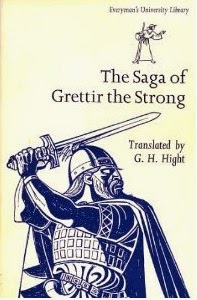
 I have so many books I picked up for free, you have no idea. But the most recent is Grettir the Strong - a print version of the icelandic saga that I picked up for £1 at a "pay what you like" bookshop on the high street.
inexpensive book I've bought in the past few months is
The most expensive book, similarly, that I acquired this year must be The Riverside Chaucer. Yes, it's a course book, but I've been wanting a full collection of the Canterbury Tales for years. Money well spent, then.

His Dark Materials is a beautiful, complex, engaging, awe-inspiring, heart-breaking, world-shattering, forward-looking, story that demands every scrap of attention in the world and then some.
Mr Pullman, however, I have my issues with. The fact that his bestsellers are directly intended to erase modern religion and set up an alternative theology - no, really - being foremost among them.
The Silmarillion. I'm going to go right out and say it, I like this book more than The Lord Of The Rings.
It's everything the trilogy is, combined with a stronger sense of moral ambiguity, massively heightened stakes, and a heart belonging every inch to the epic sagas and pre-historical creation myths that inspired it.
It's wars and loves and losses and falling cities and flying skyboats battling dragons big enough to crush mountain ranges. And then some.
Sadly, as I'm already embedded in a degree demanding a lot of heavy reading, so I have reserved my free time for lighter, more entertaining, reads. Sorry Dickens. You just aren't as much fun as The Dresden Files.
You get the picture. Lookit me, the expert on ancient oral tradition, narrative convention and names that, correctly pronounced, sound like you're coughing up a hairball made of concrete.
6- Lust. What attributes do you find attractive in
Going to take the sexual / romatic element out of this altogether because that's boring and I'm a pernickety wretch.
So, let's have a nice list instead.
. . . On a more logical note, if anyone would like to buy me books two and three of The Raven Boys cycle, I'd very much like that too.
~ Charley R
1- Greed. What is your most inexpensive book? What's your most expensive book?
I have so many books I picked up for free, you have no idea. But the most recent is Grettir the Strong - a print version of the icelandic saga that I picked up for £1 at a "pay what you like" bookshop on the high street.inexpensive book I've bought in the past few months is
The most expensive book, similarly, that I acquired this year must be The Riverside Chaucer. Yes, it's a course book, but I've been wanting a full collection of the Canterbury Tales for years. Money well spent, then.
2- Wrath. What author do you have a love/hate relationship with?
Phillip Pullman.His Dark Materials is a beautiful, complex, engaging, awe-inspiring, heart-breaking, world-shattering, forward-looking, story that demands every scrap of attention in the world and then some.
Mr Pullman, however, I have my issues with. The fact that his bestsellers are directly intended to erase modern religion and set up an alternative theology - no, really - being foremost among them.
 3- Gluttony. What book have you devoured over and over again?
The Silmarillion. I'm going to go right out and say it, I like this book more than The Lord Of The Rings.It's everything the trilogy is, combined with a stronger sense of moral ambiguity, massively heightened stakes, and a heart belonging every inch to the epic sagas and pre-historical creation myths that inspired it.
It's wars and loves and losses and falling cities and flying skyboats battling dragons big enough to crush mountain ranges. And then some.

4- Sloth. What book have you neglected due to laziness?
Every year I tell myself I'll finally get around to reading Charles Dickens' Our Mutual Friend. First recommended to me by the teacher who tutored me for my Oxford interview, and who hated the majority of Dickens' work as hard as I did. I'm told it's as good as Great Expectations, maybe better.Sadly, as I'm already embedded in a degree demanding a lot of heavy reading, so I have reserved my free time for lighter, more entertaining, reads. Sorry Dickens. You just aren't as much fun as The Dresden Files.
5- Pride. What book do you talk about most in order to sound like an intellectual reader?
The Vinlandsagas. Beowulf. The Poetic Edda. The Prose Edda.You get the picture. Lookit me, the expert on ancient oral tradition, narrative convention and names that, correctly pronounced, sound like you're coughing up a hairball made of concrete.
6- Lust. What attributes do you find attractive in male characters.
Going to take the sexual / romatic element out of this altogether because that's boring and I'm a pernickety wretch.So, let's have a nice list instead.
- Humour. A character who can make me laugh is one I'll more than happily love in return.
- Power. Perhaps it's my inner megalomaniac talking, but I love a character wielding a hellish amount of punch - particularly if they're just as good at using it.
- Independence. Characters who do their own thing, whether inside or outside their established conventionality, I can support and approve of very easily.
- Empathy. Being aware of and looking out for other people is very important to me personally, and it's lovely to see it reflected in fiction, too.
- Complexity. Self-explanatory. I like a character I can sink my teeth into and taste a person as conflicted, changeable, developmental and real as me.
7- Envy. What book would you most like to receive as a gift?
If Mr George R.R. Martin would like to look down from his ivory tower and recognise a fellow in gleeful fictional xenocide and gift me the entire completed set of his Song of Ice and Fire saga, I would be the happiest woman in the world.. . . On a more logical note, if anyone would like to buy me books two and three of The Raven Boys cycle, I'd very much like that too.
~ Charley R
Subscribe to:
Posts (Atom)